
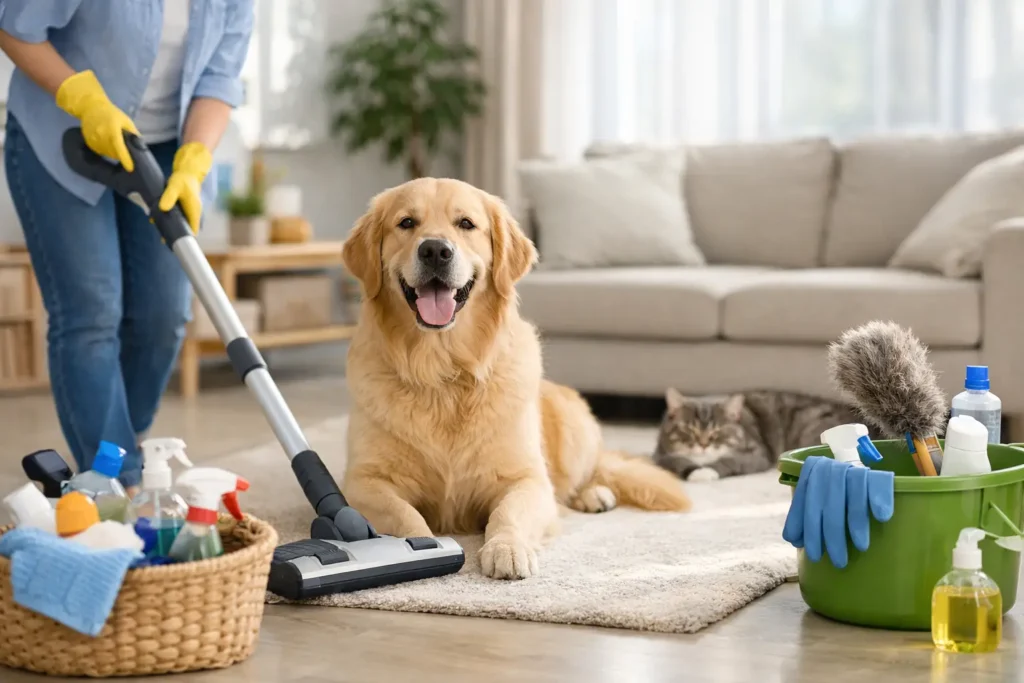
A dog racing in after a rainy Boston walk, a cat leaving fur on the sofa, and one missed litter box scoop can make a clean home feel temporary. The best cleaning routine for pet owners is not about scrubbing every room every day. It is a realistic system that handles the messes pets create before they settle into carpets, upholstery, and corners.
For busy households, consistency matters more than perfection. A few short daily tasks, a focused weekly reset, and occasional professional help can keep your home comfortable for people and pets alike.
Build the Best Cleaning Routine for Pet Owners Around Real Life
Every pet and home has different needs. A single short-haired indoor cat in a one-bedroom apartment creates a different cleaning workload than two large dogs in a family home with carpeted stairs. Shedding level, outdoor time, allergies, floor types, and the number of pets all affect what your routine should include.
Start by identifying your home’s biggest pressure points. For many pet owners, these are entryways, feeding areas, favorite sleeping spots, upholstered furniture, and the floors closest to doors. Cleaning these areas more often makes the whole house look and feel cleaner, even when you do not have time for a full-house reset.
Keep basic supplies where you use them. A small basket near the entryway with towels for paws, a handheld vacuum near the living room, and an enzyme cleaner stored safely near pet areas make quick cleanup much easier. When supplies are convenient, small messes are less likely to turn into stubborn stains or lingering odors.
Daily Tasks That Keep Pet Messes Under Control
Daily cleaning should be quick enough to fit between work, school pickup, dinner, and dog walks. Aim for 10 to 15 minutes rather than trying to clean every surface.
Wipe Paws and Tidy the Entryway
Rain, road salt, mud, pollen, and sidewalk grit can travel surprisingly far through a home. Keep a washable towel by the door and wipe paws after walks, especially during wet spring weather and snowy Massachusetts winters. If your pet tolerates it, a gentle paw rinse can help after particularly messy outings.
Sweep or vacuum the entryway daily when needed. This prevents grit from scratching hard floors and keeps debris from being carried into bedrooms and living spaces.
Handle Food, Water, and Litter Right Away
Pet feeding areas can collect crumbs, splashed water, and greasy residue quickly. Wipe bowls and the surrounding floor each day, then wash bowls regularly with hot, soapy water. A waterproof mat under bowls helps contain the mess and is easier to clean than flooring.
For cat owners, scoop litter boxes daily. This is the simplest way to control odor and reduce tracked litter. Place a litter-catching mat outside the box, and vacuum around it often. If litter dust is a concern, choose a cleaning method that picks it up rather than scattering it around the room.
Do a Fast Fur Pass
Pet hair looks most noticeable on dark floors, furniture, and baseboards. Spend a few minutes using a vacuum, microfiber mop, or reusable pet-hair tool in the places your pet spends the most time. Focus on visible fur first: the couch, pet bed, rugs, and hallway corners.
Brushing your pet on a regular schedule also reduces the amount of fur that reaches your floors and fabrics. The right frequency depends on your pet’s coat, so follow guidance from your veterinarian or groomer if you are unsure.
Address Accidents Immediately
For urine, vomit, muddy paw marks, or other accidents, speed matters. Blot liquids with a clean towel rather than rubbing them deeper into carpet or upholstery. Then use a pet-safe enzyme cleaner according to the label directions. Enzyme products are especially useful for organic stains because they help break down the material that causes odor.
Avoid masking odors with heavily scented sprays. Pets have sensitive noses, and fragrance can cover a problem without actually removing it. A clean, neutral-smelling home is usually the better goal.
Your Weekly Pet-Friendly Home Reset
A weekly cleaning session is where you remove the buildup that daily touch-ups cannot reach. Set aside time on the same day each week, or divide these jobs across two shorter sessions. A consistent schedule is easier to maintain than waiting until the house feels overwhelming.
Vacuum floors thoroughly, including under furniture and along baseboards. Use attachments for stairs, sofa cushions, pet beds, and crevices where fur gathers. If you have wall-to-wall carpeting, vacuum slowly enough for the machine to lift embedded hair and dirt. High-traffic areas near doors may need a second pass.
Mop hard floors with a product that is appropriate for the surface and safe to use around pets when used as directed. Keep pets away until the floor is fully dry. This helps prevent paw prints and reduces the chance that they will lick or walk through cleaning solution.
Wash pet bedding, blankets, and removable furniture covers weekly or as needed. These fabrics hold fur, dander, body oils, and outdoor odors. Check care labels before washing, and use a detergent that works for your household without leaving an overpowering scent. Clean beds thoroughly, including the inside cushion, rather than washing only the cover.
Wipe down the places pets touch often: door frames, lower cabinets, windows, crate surfaces, carriers, and the outside of litter boxes. Do not forget collars, leashes, and toys. A damp cloth and mild cleaner are often enough for routine care, though items should be rinsed and dried when appropriate.
Control Odors Without Overcleaning
A pet home should not smell like perfume. It should simply smell clean. Odor control works best when you remove the source instead of adding fragrance on top of it.
Good airflow makes a meaningful difference. Open windows when weather allows, run bathroom and kitchen fans, and replace HVAC filters on schedule. If your home has multiple pets or anyone with allergies, you may need to change filters more frequently based on the manufacturer’s recommendations.
Carpets and upholstery deserve extra attention because they trap dander and odor below the surface. Vacuuming helps, but periodic deep carpet cleaning is often needed, particularly in homes with older pets, puppies, or frequent rainy-day walks. The right timing depends on your household, but if rooms still smell stale after routine cleaning, it may be time for a deeper service.
Be thoughtful about cleaners. Never assume that a product is pet-safe because it is labeled natural or has a mild scent. Read labels carefully, store products out of reach, and keep pets away from treated areas until they are dry. If a pet has respiratory sensitivities, skin concerns, or a habit of licking floors, ask your veterinarian for guidance on products and precautions.
Monthly Jobs That Make Daily Cleaning Easier
Once a month, take care of the areas where pet-related dirt quietly accumulates. Move lightweight furniture to vacuum underneath, clean behind food stations, and wash washable rugs. Wipe baseboards, vents, and lower walls, especially if your dog leans against them after walks or your cat rubs against corners.
Check pet beds, scratching posts, crates, and toys for wear. Torn fabric, damaged stuffing, and heavily chewed items can hold dirt and may be harder to clean safely. Replacing a worn item can sometimes be more practical than repeatedly trying to restore it.
This is also a good time to wash throw pillows and blankets, clean upholstery more thoroughly, and inspect carpets for spots that need attention. Catching a small stain early is usually far easier than removing one that has been walked on for weeks.
When to Bring in Professional Help
A home with pets does not need to be spotless to be healthy and comfortable. Still, routine cleaning can fall behind during busy work seasons, travel, illness, shedding periods, or life changes. Professional cleaning can give you a reset without spending your weekend catching up.
Recurring house cleaning is useful for maintaining floors, bathrooms, kitchens, dusting, and the surfaces that collect daily pet fur. A deep cleaning may be a better fit when buildup has collected in overlooked areas, while carpet cleaning can help with embedded dirt, fur, and pet-related odors. Be clear about your pets, their routines, and any sensitive areas before a cleaning appointment so the team can work safely and efficiently.
Miss Clean provides pet-conscious home cleaning for Greater Boston households that need dependable help without disrupting the routines that keep pets comfortable.
The most effective routine is the one your household can keep. Start with the entryway, pet bedding, floors, and feeding areas, then adjust as you notice what your pet brings home. A few steady habits can leave more room for the best part of pet ownership: enjoying your home together.